




By David S. Bauders, CEO SPARXiQ
In the competitive world of distribution, pricing is a critical lever for driving profitability and growth. However, the complexity of managing thousands of products and customers makes strategic pricing a daunting task. This article explores the key considerations and steps for distributors looking to enhance their pricing strategies through effective distribution pricing solutions:
- Understanding Common Distribution Pricing Challenges
- 5 Key Steps in the Distributor Pricing Strategy Process
- Types of Distribution Pricing Solution Providers
- Wholesale Pricing Strategy FAQs

Understanding Common Distribution Pricing Challenges
Distributors often face several challenges when implementing pricing strategies:
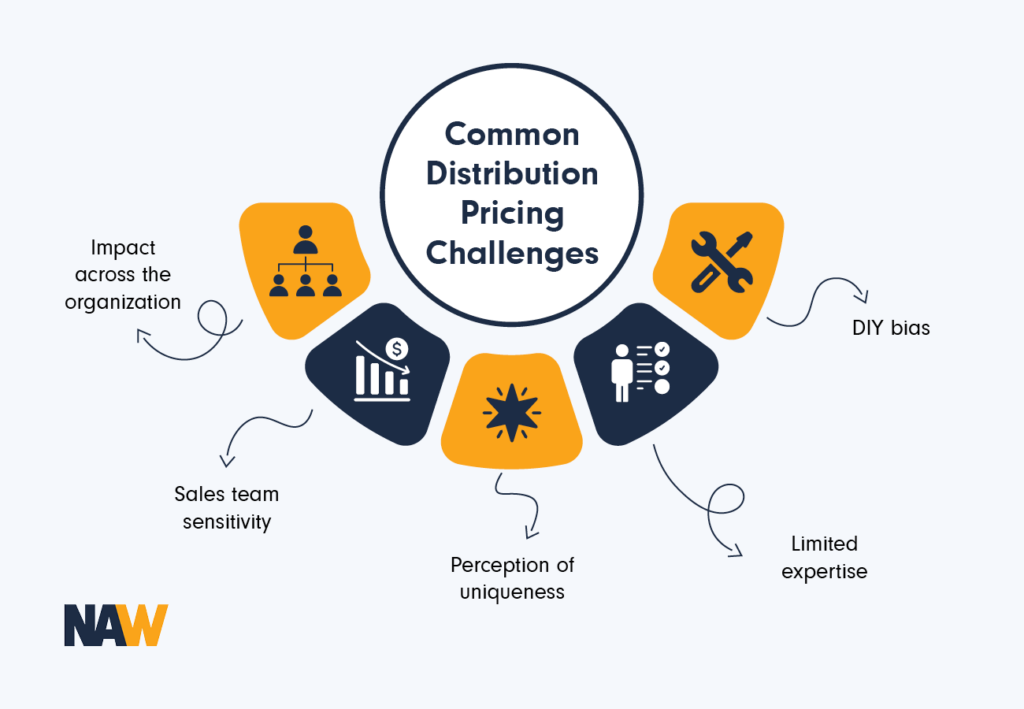
- Impact across the organization: Pricing affects various departments, from sales and marketing to IT and finance. Therefore, a holistic approach that considers all perspectives is crucial. Effective strategic pricing must incorporate the insights and needs of each department to ensure comprehensive alignment and buy-in.
- Sales team sensitivity: Sales teams are often wary of price changes, fearing they may lose business. Sellers worry that even small price increases could hinder their ability to close new deals or retain existing customers. Involving sales leadership in pricing decisions and clearly communicating goals can mitigate these concerns. A top-down communication strategy helps the entire sales organization understand the objectives and benefits of the pricing initiative.
- Perception of uniqueness: Many distributors believe their business is unique, making them resistant to adopting common best practices. While every company has its own distinct characteristics, proven pricing methodologies can deliver results across different industries. Distributors should be open to leveraging these best practices while customizing them to fit their specific business context.
- Limited expertise: Many distributors lack dedicated pricing experts. Internal teams are often stretched thin, with pricing responsibilities falling to individuals with limited experience or resources. Leveraging external services or equipping internal teams with the resources they need to succeed can help bridge this gap.
- DIY bias: Some distributors prefer to handle pricing internally despite the complexities involved. This do-it-yourself approach is often driven by the desire to maintain control and reduce costs. However, the enterprise-value consequences of getting pricing right make it a candidate for seeking external support. Engaging external partners can provide the expertise and resources needed for effective pricing management.
Watch this clip from the 2025 NAW Executive Summit that summarizes some of the main challenges with distribution pricing:
Explore the full panel here.
5 Key Steps in the Distributor Pricing Strategy Process
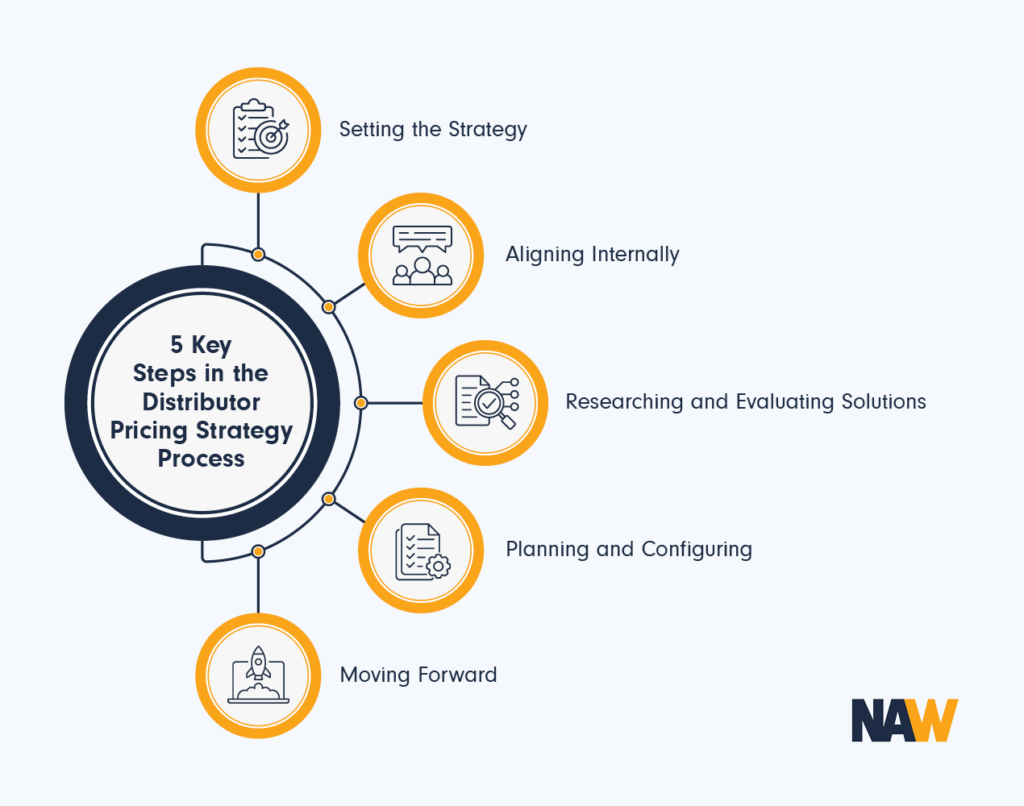
1. Setting the Strategy
Before diving into solutions, it’s essential to:
- Evaluate your current state. Assess your current pricing performance against industry benchmarks. Understanding your baseline allows you to identify areas for improvement and set realistic goals. Use financial metrics such as gross margins and profitability to gauge your performance relative to best-in-class peers.
- Define objectives. Establish clear financial and operational goals. Determine what you aim to achieve through improved pricing, whether it’s increased margins, higher sales volume, or enhanced market share. These objectives will guide your decision-making process and help you measure success.
- Appoint a leader. Designate an executive to lead the pricing initiative. This individual should have a deep understanding of the business and the authority to drive change across departments. The leader will be responsible for aligning the team, setting expectations, and ensuring the initiative stays on track.
2. Aligning Internally
Gather input from relevant departments to understand their pain points and desired improvements. This cross-functional approach ensures that all perspectives are considered and that the pricing strategy addresses the needs of the entire organization. Develop a list of “musts” (essential features) and “nice-to-haves” (additional beneficial features) to prioritize your requirements.
Form a small project team representing key departments to explore and evaluate potential solutions. This team should include leaders from sales, marketing, finance, IT, and operations. Ensure that each team member understands the strategic goals and is committed to driving the initiative forward.
3. Researching and Evaluating Solutions
Identify a shortlist of solution providers that align with your needs. Evaluate their track records, costs, and how well they integrate with your existing ERP system. Look for solutions that have been proven in your industry and by companies of similar size and complexity.
Focus on solutions that meet your essential requirements while also considering additional features that could benefit your business. Evaluate potential providers based on their ability to deliver on your musts and as many nice-to-haves as possible.
4. Planning and Configuring
Work with your chosen provider to finalize the implementation plan. Ensure they understand your goals and can configure their solution to meet your specific needs. Involve technical and operational experts from your team as needed to address detailed requirements.
Develop an implementation timeline that accounts for the availability of internal resources and the provider’s capabilities. Ensure that all stakeholders are aware of their roles and responsibilities during implementation.
5. Moving Forward
Commit to the chosen solution and proceed with implementation. Keep your project team involved throughout the process to ensure deliverables meet expectations and maintain communication across departments. Regular check-ins and progress reviews can help identify any issues early and ensure the project stays on track.

Types of Distribution Pricing Solution Providers
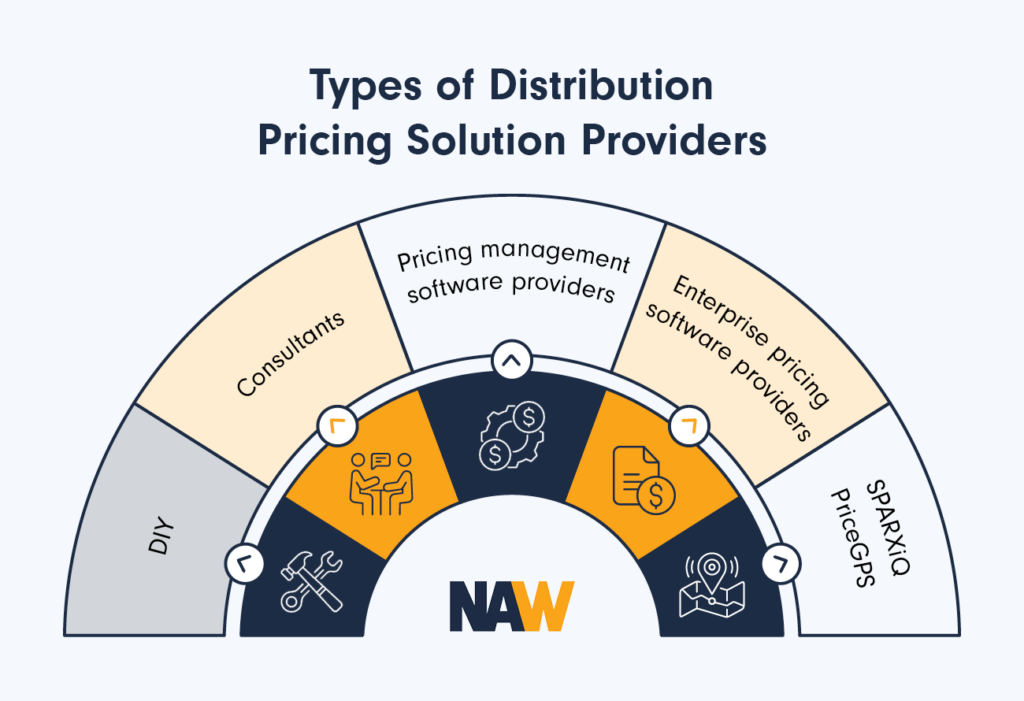
- DIY (no outside vendor): Managing pricing internally can work for some but often falls short of achieving elite performance due to limited expertise and resources. DIY approaches require significant internal capabilities, including a team of experienced pricing professionals, robust data analytics, and strong IT support.
- Consultants: Consultants provide strategic guidance and data analysis but may lack the advanced tools and ongoing support needed for continuous improvement. They can help develop pricing strategies and provide insights based on their experience with similar companies. However, their involvement is often limited to specific projects rather than ongoing support.
- Pricing management software providers: These providers offer tools to simplify pricing management and integrate with your ERP but may not provide deep strategic insights. They focus on enhancing the functionality of your existing systems, making it easier to manage pricing on a day-to-day basis.
- Enterprise pricing software providers: These providers deliver comprehensive solutions with advanced analytics and robust reporting but require significant investment and internal resources. These solutions are best suited for large distributors with complex pricing needs and the capacity to support extensive IT projects.
- SPARXiQ PriceGPS: This solution combines consulting, advanced analytics, and integration with existing systems, offering a balanced approach for distributors seeking to enhance their pricing capabilities. SPARXiQ provides ongoing support and training to ensure the success of your pricing initiatives.
Wholesale Pricing Strategy FAQs
What makes strategic pricing so challenging for wholesale distributors?
The sheer complexity of the distribution model is the primary hurdle. Distributors typically manage thousands of SKUs and diverse customer segments while relying heavily on seller-negotiated pricing. This volume makes it nearly impossible to optimize margins using manual processes, legacy spreadsheets, or simple guesswork.
How can leadership overcome sales team resistance to new pricing strategies?
Sales representatives are naturally protective of their customer relationships and often fear that structured price changes will cost them deals. To mitigate this sensitivity, leadership must involve sales managers early in the wholesale pricing strategy process. Clear, top-down communication about how the new pricing model will protect margins—while keeping quotes competitive and data-driven—is essential for team buy-in.
Should distributors build their own pricing tools or hire an external provider?
Many distributors suffer from a DIY bias, attempting to build pricing matrices in-house to maintain control and reduce upfront costs. However, because internal teams are often stretched thin, this approach rarely scales and leaves massive margin potential on the table. It is highly recommended to partner with external distribution pricing experts and software providers who offer proven methodologies and seamless ERP integrations.
Which departments should be involved in evaluating a new distribution pricing solution?
Distribution pricing is not just a finance or IT initiative. To ensure successful adoption, distributors should form a cross-functional project team. This team should include leaders from sales, marketing, finance, operations, and IT so that you consider all operational realities before selecting a vendor.
What are the most important criteria when selecting distribution pricing software?
When evaluating a pricing solution, distributors should prioritize providers with a strong track record in the B2B wholesale distribution industry. The most critical technical requirement is seamless integration with your existing ERP system. Beyond that, the software should align with your specific financial objectives, whether that is dynamic market pricing, customer segmentation, or contract leakage prevention.
Conclusion
Selecting the right distribution pricing solution involves understanding your company’s unique needs, aligning internal stakeholders, and thoroughly evaluating potential providers. By following a strategic approach, distributors can leverage pricing solutions to achieve superior profitability and market strength. The journey to elite profitability requires commitment, but the rewards are well worth the effort.
By understanding the challenges, setting a clear strategy, aligning internally, and carefully evaluating your options, you can make informed decisions that enhance your pricing capabilities and drive business growth. The right pricing solution can transform your operations, improve margins, and give you a competitive edge in the market.