August 2025
An Analysis of Wage Outcomes for RLA, NLRA, and Non-Union Workers in the Manufacturing & Transportation Sectors
The following infographic is an excerpt from the “Are NLRA-Unionized Workers Better Off?” report by Elevated Insights Group commissioned by NAW demonstrated that over the past decade, aggressive NLRA union activity has not produced exceptional results for workers.

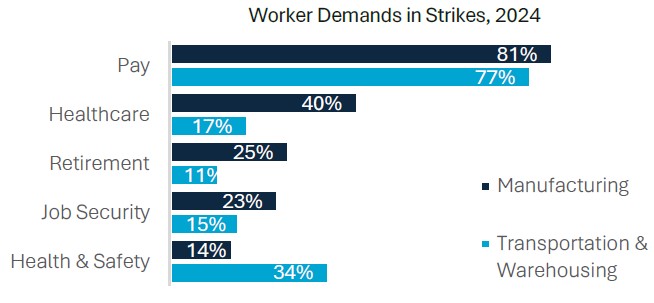
NLRA-governed unions strike more frequently; higher pay is a top demand.
- Unions use strike authorizations and work stoppages as leverage in contract negotiations. NLRA unions strike more often than RLA.
- Roughly 80% of manufacturing and transportation strikes cite pay as key demand.
- In transportation equipment manufacturing alone, over 20 strikes were authorized by union workers between 2015 to 2024.
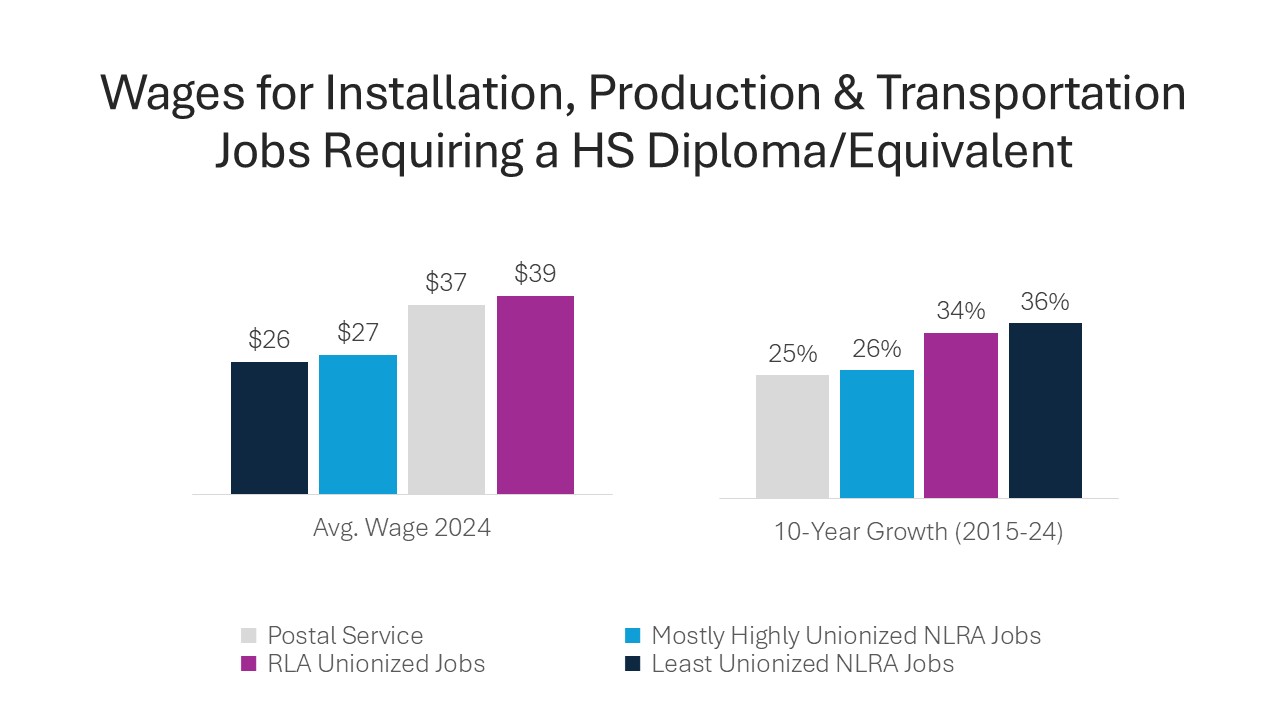
Wage growth for highly unionized NLRA jobs lags RLA and less unionized groups.
- Manual labor, material moving, and skilled trades are essential and highly unionized manufacturing and transportation jobs.
- RLA-unionized workers had higher pay and faster wage growth than workers in the most unionized NLRA jobs.
- The least unionized NLRA jobs had better wage growth than all the highly unionized groups including RLA, NLRA, and the Postal Service.
Excessive union demands have resulted in major layoffs.
- Excessive pressure from unions can force restructuring and plant closures causing major layoffs.
- 60% of major manufacturing and transportation layoffs occurred at companies with unions.
- 87% of major transportation equipment manufacturing layoffs had unions; Most occurred within a year of strike activity.
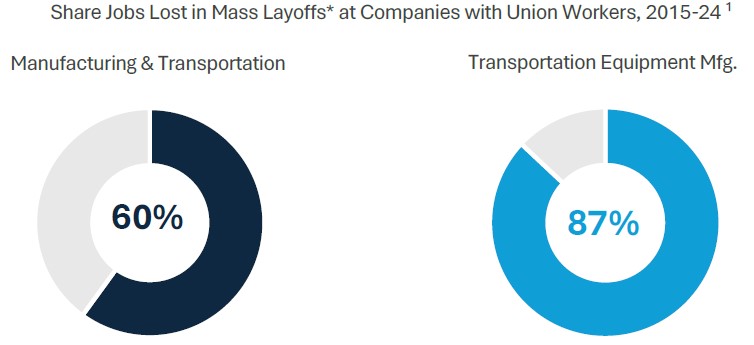
1 Major layoffs include those with 1,000+ jobs or more.
Source: Elevated Insights Group and National Association of Wholesaler-Distributors. 2025.
“Are NLRA-Unionized Workers Better Off.” August.