





Economic Trends
U.S. Wholesale Trade Snapped 6-Month Streak of Job Gains in October
Labor department figures show the industry lost 9,100 jobs during the month, with nondurable goods accounting for the vast majority. Get the other key figures and context here.

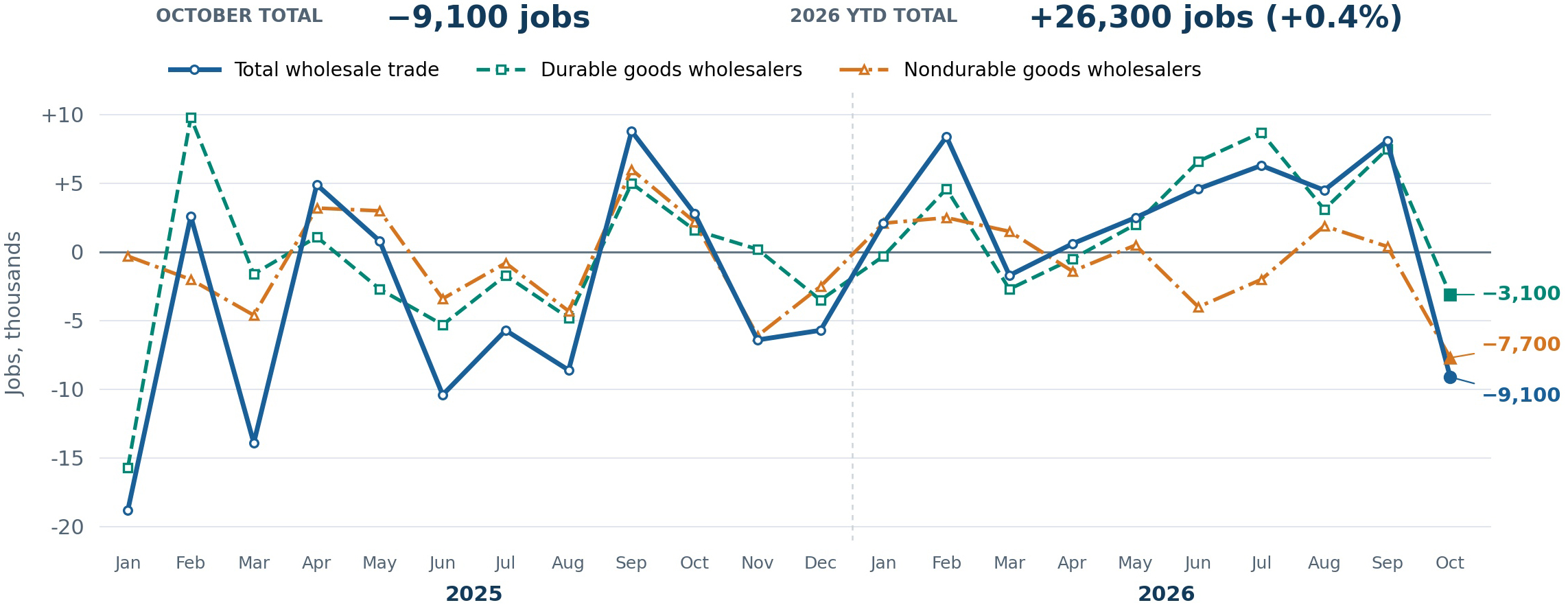
U.S. wholesale trade lost 9,100 jobs in October, ending six consecutive months of employment gains, according to the Bureau of Labor Statistics’ monthly employment report released Nov. 6.
The decline brought wholesale employment to a seasonally adjusted 6,068,800, down 0.15% from September. Through the first 10 months of 2026, the sector had added 26,300 jobs — a 0.4% increase from December 2025.
October’s decrease followed revised gains of 8,100 jobs in September and 4,500 in August. It was wholesale trade’s largest monthly employment decline since June 2025, when the sector shed 10,400 jobs.
Nondurable goods merchant wholesalers accounted for most of October’s decline, losing 7,700 jobs. Durable goods merchant wholesalers cut 3,100 jobs, while wholesale trade agents and brokers added 1,700.
Wholesale Trade Job Movement
Across the broader U.S. economy, total nonfarm payroll employment increased by 165,000 in October to 159.3 million. That followed revised gains of 60,000 in September and 186,000 in August. BLS revised those two months’ combined employment gains upward by 84,000 from previously reported estimates.
Year-to-date, U.S. employers added 861,000 jobs, a 0.5% increase from December 2025 and an average monthly gain of 86,100.
Professional and business services led October’s hiring with 70,000 additional jobs, followed by health care with 42,000 and transportation and warehousing with 25,000. The unemployment rate changed little at 4.1%, while the labor force participation rate was 61.9%.
Manufacturing employment increased by 19,000 in October to 12,681,000, following gains of 13,000 in September and 21,000 in August. Manufacturers added 101,000 jobs through October, up 0.8% from December 2025.
Within manufacturing, durable goods producers added 25,000 jobs during October, partially offset by a 6,000-job decline among nondurable goods producers. The manufacturing workweek remained unchanged at 40.5 hours, while overtime edged up to 3.1 hours.
September and October employment estimates are preliminary and subject to revision.