




Economic Trends
U.S. Construction Spending Posts Unexpected Sharp September Decline
Spending fell well short of expectations as residential renovation weakness weighed on the total. Meanwhile, data centers helped extend nonresidential construction’s growth streak to six months. Get the key figures and private/public breakdown here.
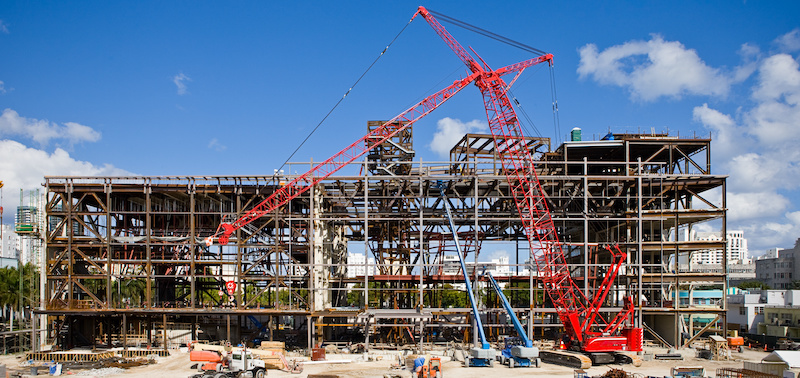
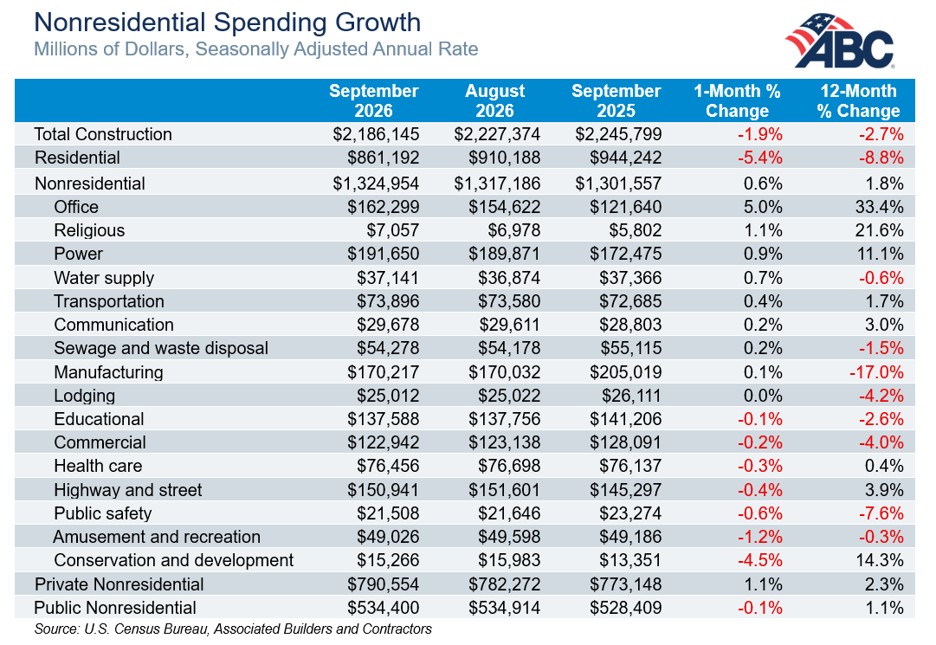
The U.S. Census Bureau released its monthly construction spending report on Nov. 2, covering September 2026, with the figures showing a steep monthly decline driven by residential remodeling weakness, while data centers continued to carry nonresidential.
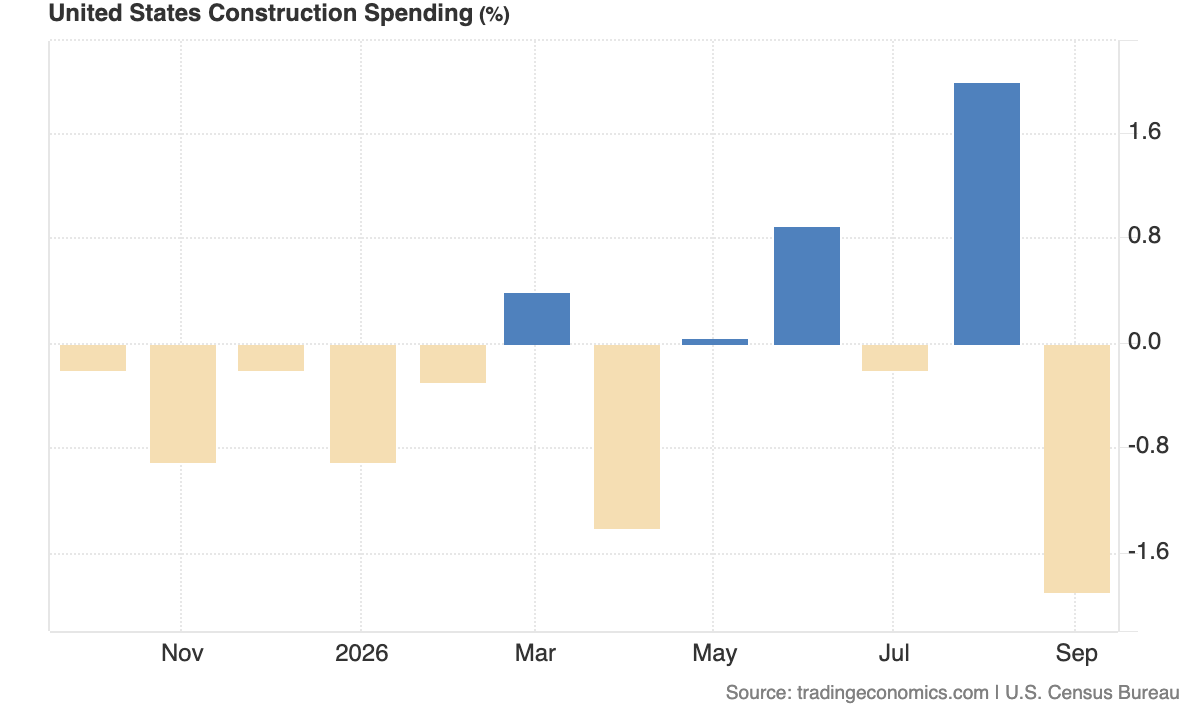
Total spending was estimated at a seasonally adjusted annual rate of $2.186 trillion — down 1.9% month-over-month and 2.7% year-over-year.
The decline contrasted with expectations for a 0.3% increase among economists polled by Reuters and nearly reversed August’s upwardly revised 2.0% gain, previously reported at 0.9%.
Through the first nine months of 2026, construction spending totaled $1.650 trillion, down 2.9% from the same period in 2025.
September residential spending was $861.2 billion — down 5.4% month-over-month and 8.8% year-over-year. Reuters reported that high materials costs likely depressed spending on residential renovation projects.
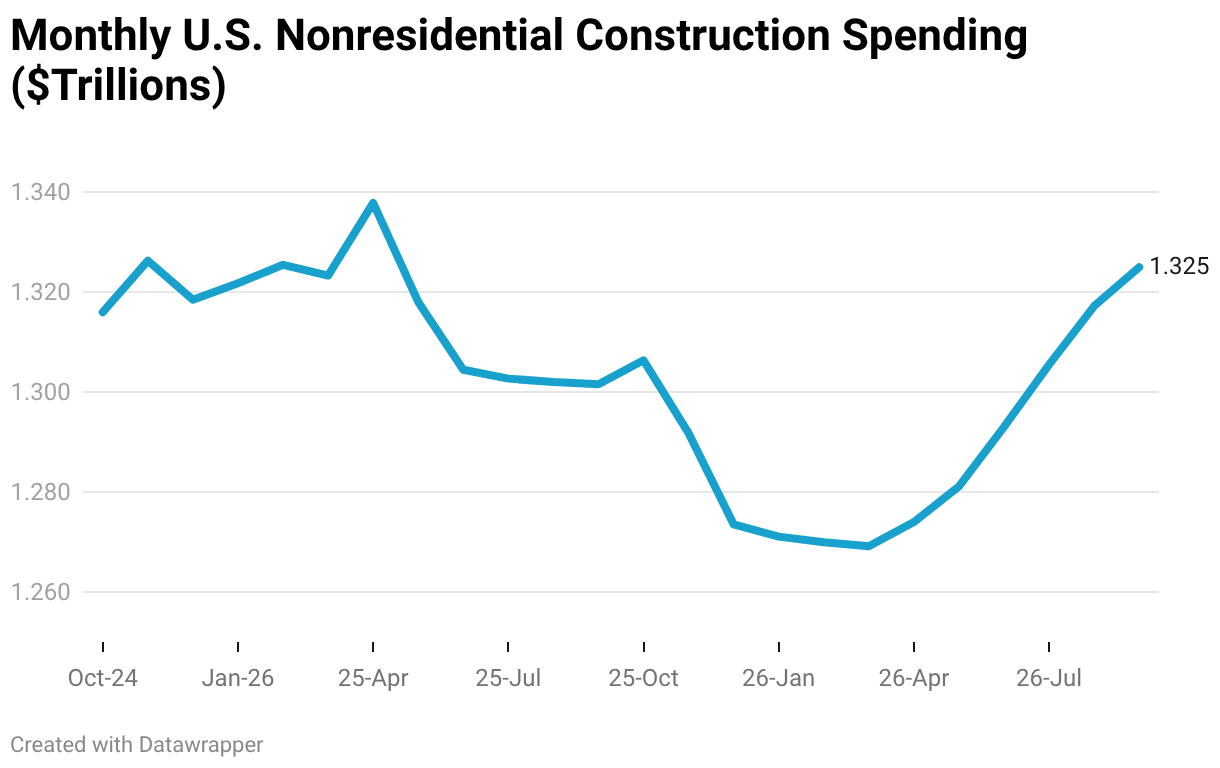
Nonresidential spending reached $1.325 trillion — up 0.6% month-over-month and 1.8% year-over-year, marking its sixth consecutive monthly increase.
Nonresidential spending increased in eight of 16 subcategories. Office spending rose 5.0% month-over-month and 33.4% year-over-year, while manufacturing edged up 0.1% but remained 17.0% below September 2025.
Associated Builders and Contractors Chief Economist Anirban Basu said data centers accounted for virtually all September’s nonresidential growth. Data center spending jumped 8.6% during the month and has grown at a 217% annualized rate since May.
“As has been the case for several months, data centers accounted for virtually all of that increase,” Basu emphasized. “Excluding data centers and the closely related power category, nonresidential spending actually fell in September. It’s increasingly difficult to contextualize the speed of the data center boom. Given the recent rise in treasury yields and ongoing materials price escalation, momentum will remain narrowly concentrated in artificial intelligence-related segments over the next several months. While contractors remain busy in the aggregate, current market dynamics will continue to favor larger contractors who are far more likely to be involved in data center and power projects.”
Private Construction
Total private construction spending was $1.639 trillion — down 2.4% month-over-month and 3.8% year-over-year.
Private residential spending totaled $848.8 billion — down 5.5% month-over-month and 8.9% year-over-year.
- New single-family: $403.4 billion, flat month-over-month and down 2.4% year-over-year.
- New multifamily: $115.9 billion, up 0.1% month-over-month and down 0.2% year-over-year.
Private nonresidential spending totaled $790.6 billion — up 1.1% month-over-month and 2.3% year-over-year. Private office spending increased 5.5% during the month, while manufacturing declined 0.3%.
Public Construction
Total public construction spending was $546.8 billion — down 0.1% month-over-month and up 1.0% year-over-year.
- Residential: $12.4 billion, up 1.8% month-over-month and down 4.6% year-over-year.
- Nonresidential: $534.4 billion, down 0.1% month-over-month and up 1.1% year-over-year.
Public highway spending declined 0.3% month-over-month to $149.2 billion, while educational spending was virtually unchanged at $113.1 billion.