
Electrical
Shore Capital Taps Former Motion Exec to Lead Automation Distribution Platform
May 14, 2026


Management
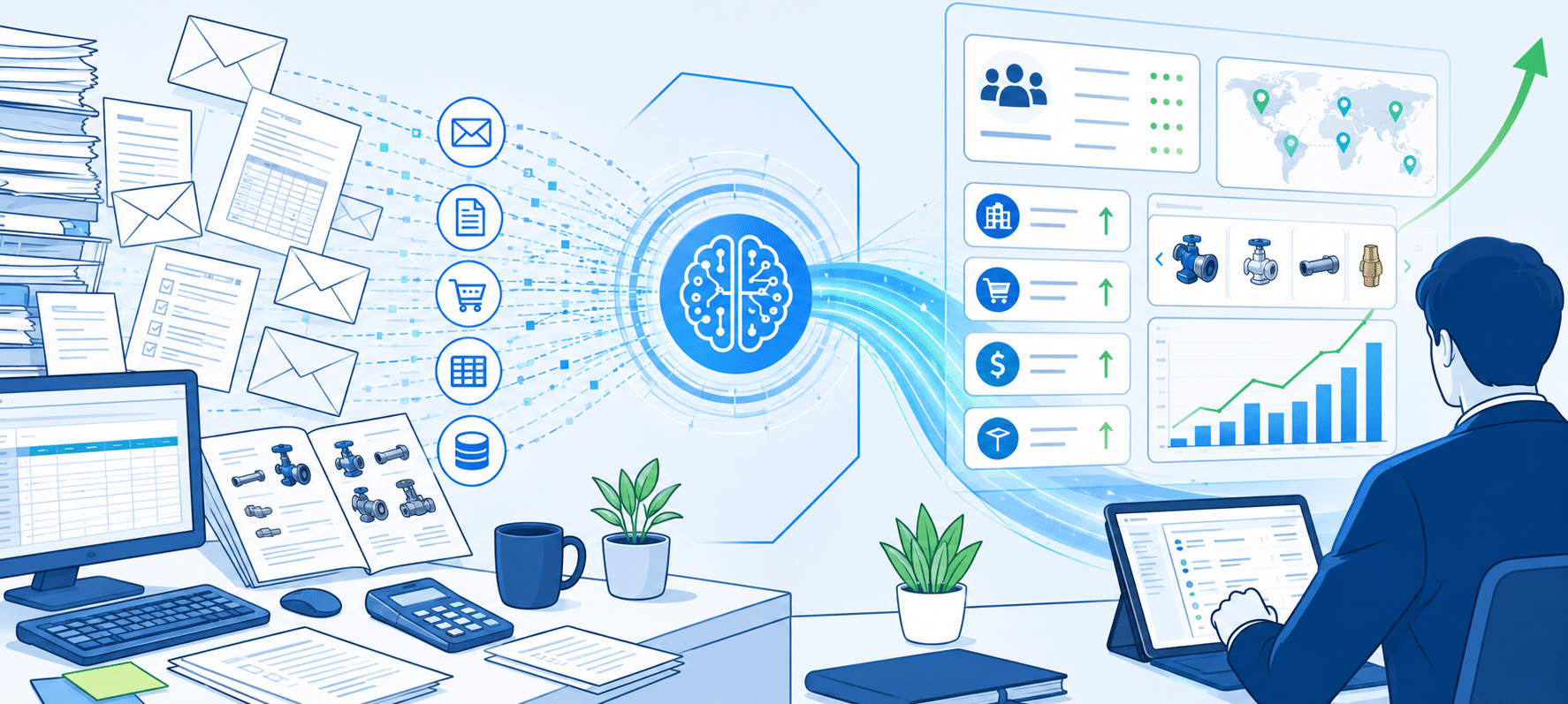
Wholesale distributors are sitting on an overlooked asset: the judgment and institutional knowledge of their most experienced employees. This article explains how AI can help companies capture that “tenure capital” before a historic retirement wave carries it out the door for good.

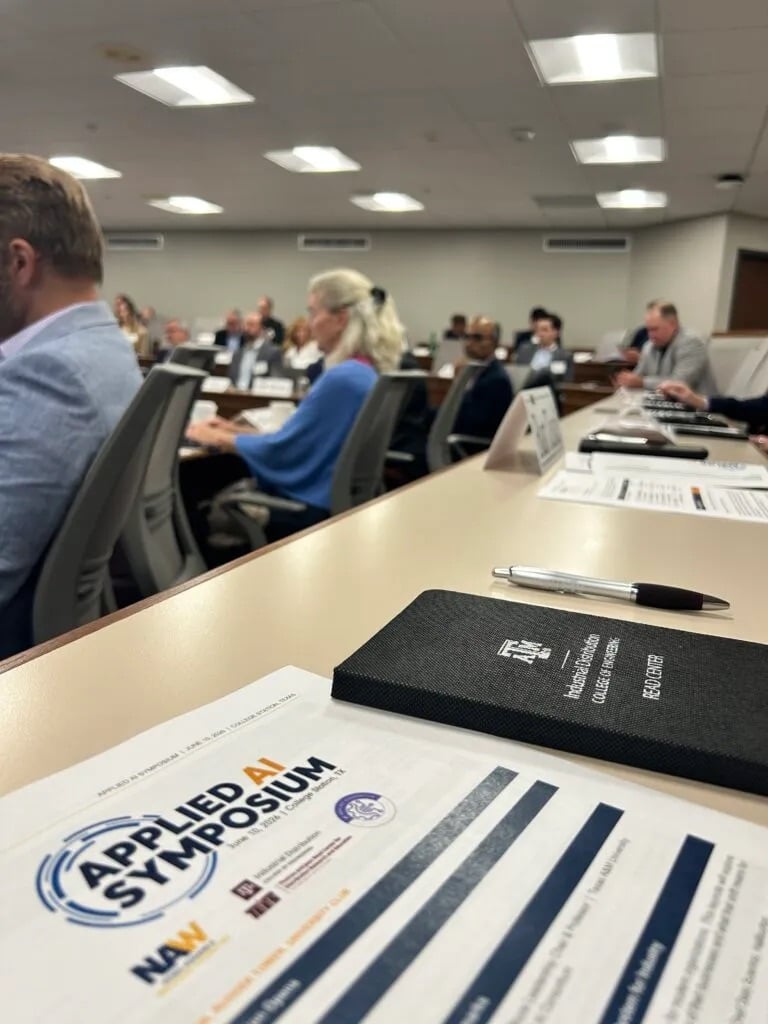
At the inaugural Applied AI Symposium — hosted June 10 in College Station, TX by the NAW Institute for Distribution Excellence, Texas A&M’s Industrial Distribution Program, the Thomas and Joan Read Center and the AI Applied Consortium — one comment cut through more than any slide did. Ron Dowdell, managing director at Pilko, pointed to the “silver tsunami” — the wave of experienced employees approaching retirement — and asked a question most organizations haven’t answered: what knowledge are you actually capturing as a baseline before they leave? He said most companies aren’t thinking nearly hard enough about it.
 There’s a name worth putting on what’s actually at risk in that wave. Call it tenure capital: the accumulated judgment, pattern recognition, and decision-making instinct a person builds up over years on the job, the kind of knowledge that never made it into a manual because nobody thought to write it down. Every distribution company is sitting on a balance sheet of it. Almost none of them are tracking it, and the silver tsunami is about to force a lot of withdrawals at once.
That’s the real deadline behind distribution’s AI conversation. Not who deploys fastest. Not which generation adapts quickest. A closing window to capture tenure capital before it walks out the door for good.
Wholesale trade has aged faster than almost any sector of the U.S. economy. U.S. Census Bureau research published in late 2025 found that the share of wholesale trade employment at firms where at least a quarter of the workforce is over 55 rose from 14 percent in 2000 to more than 40 percent in 2022 — a shift matched by only manufacturing and utilities.
Nationally, roughly 4.1 million Americans are turning 65 every year through 2027, the largest retirement wave the country has seen. Distribution will feel it earlier and harder than most industries, because it’s already further along the curve, and further along the curve means more tenure capital concentrated in fewer remaining years of service.
This isn’t hypothetical. Large companies lose real money every year specifically because tenure capital evaporates instead of transferring. Research from Panopto’s Workplace Knowledge and Productivity study puts the average large U.S. company’s loss at $47 million a year in productivity tied directly to inefficient knowledge sharing, and estimates that Fortune 500 companies collectively lose at least $31.5 billion a year the same way.
The same research found that 42% of institutional knowledge is unique to the individual employee who holds it and never gets shared with colleagues, meaning when that person leaves, nearly half of what they knew leaves with them. Separately, Gallup research cited by SHRM puts the cost of replacing a single employee at roughly half to twice their annual salary, before anyone accounts for the judgment gap left behind.
None of that data was generated with AI in mind. It’s simply what tenure capital has always cost companies when it isn’t captured. What’s new is that there’s now a practical way to capture it before it leaves.
 Distributors are already building this into live workflows. Some companies are embedding agents at employee approval points that asks every approver, in plain language, why they’re approving a given rebate or at credit-hold override points that ask a manager why they’re releasing a shipment against policy. Those conversations become data. Capture enough of that data across an organization, and tenure capital that would have walked out the door with a departing employee instead stays on the books. At the Applied AI Symposium, Amit Shah, CEO of InstaLily, made the competitive version of the same point: the differentiator between companies is increasingly which ones capture tribal knowledge fastest.
Both are describing the same shift. Tenure capital used to be the one asset a company couldn’t actually hold onto past someone’s last day. It no longer has to be. But that only works if the capture happens before the person leaves, not after.
The obvious assumption is that this is a generational handoff: the older workforce holds the tenure capital and resists the tools, the younger workforce arrives fluent and eventually takes over, and time solves the problem on its own. Wait long enough, and the digital natives inherit the building.
Shah pushed back on that directly at the symposium, though it’s worth being precise about what his comment actually supports. In his experience working with large client organizations, he said the biggest performance gains haven’t come from younger employees being more comfortable with the tools. They’ve come from the middle layer of teams, the people with real tenure and judgment, because AI multiplies expertise that already exists rather than rewarding comfort with technology for its own sake. That’s his own stated observation from his client work, not an independently verified finding, but it lines up with the broader argument here: tenure capital is what AI actually multiplies, not generational comfort with new tools.
That matters more than it sounds like. If the value comes from multiplying existing tenure capital rather than from generational fluency, waiting for younger talent to take over doesn’t solve the problem. It just delays the moment someone has to go capture what the retiring generation knows, possibly past the point anyone is still there to ask.
A lot of family businesses run on a version of the generational story without quite naming it: the plan is often to modernize “when the kids take over,” on the theory that the next generation will simply bring the tech fluency the business needs. The evidence above suggests that’s backward. The fluency isn’t the scarce resource. The founder’s tenure capital is, the specific read on which customers get flexibility and why, which supplier relationships matter more than the contract says, which exceptions are worth making.
That capital has a shelf life measured by the founder’s calendar, not by when the next generation feels ready to lead. Waiting for the handoff to drive AI adoption gets the sequence exactly backward. The capture has to start with the generation that’s leaving, while they’re still in the building, not the one arriving to replace them.
Distribution doesn’t have a generational AI problem. It has a tenure capital problem, and conflating the two is exactly how organizations talk themselves into waiting. The question worth asking this quarter — whether you’re running a division of a public company or a third-generation family business — isn’t which generation is ready to lead. It’s narrower: how much tenure capital does your most experienced person hold, and what’s the actual plan to capture it before they leave?
Stay Informed
News, trends, and analysis for wholesale distribution leaders. Free, everyday.
Subscribe to MDM Update