





Cybersecurity
Kaspersky: Barcode Scanner Flaws Could Expose Warehouse Networks
Researchers found that attackers within wireless range could exploit barcode scanners to access connected computers, potentially putting warehouse systems and order fulfillment at risk.

Cybersecurity firm Kaspersky said Oct. 20 that it identified barcode scanner vulnerabilities that could provide attackers an entry point into warehouse networks, with potential implications for distribution centers, retailers and other businesses using the devices.
Presented at the Security Analyst Summit 2026 in Bali, the findings emerged from a broader security assessment of warehouse technology. Kaspersky identified missing authentication between scanners and their base stations as a key weakness.
In a typical setup, a handheld scanner communicates with a base station connected to a workstation or business system. Researchers found that an attacker within wireless range could send simulated keyboard inputs to the connected computer and potentially execute unauthorized code without the worker taking any action.
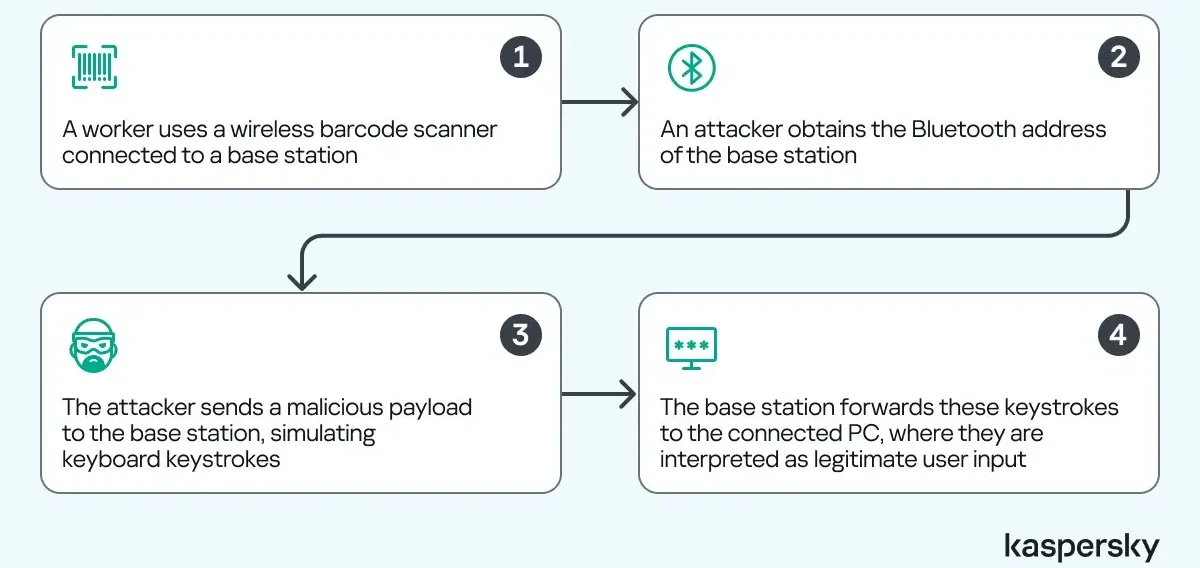
Kaspersky’s accompanying technical report said researchers observed the attack pattern across devices from multiple vendors. It also described a separate route involving maliciously crafted barcodes or QR codes that could inject keyboard commands when scanned.
The compromised computer could then provide access to other warehouse systems through its existing network connections. The report identified potential consequences of broader warehouse system compromises, including inaccurate inventory records, misdirected shipments and interrupted order fulfillment. These were potential attack scenarios, rather than a reported breach involving the newly disclosed scanner findings.
“The warehouse sector, and the broader retail industry, should treat cybersecurity as a top priority across every layer of their operations,” said Sergey Sidorov, Kaspersky’s Head of Industrial Security Services.
Kaspersky recommended checking devices before connecting them to networks, disabling unused Bluetooth interfaces and strengthening authentication. It also advised separating warehouse networks to limit unnecessary connections, promptly updating devices and warehouse management systems, restricting account permissions and conducting security exercises that include threats involving insiders with legitimate access.