

Is Data Really Modernization, or Just Lipstick on a Pig?
Moving flawed data to the cloud or dressing it up with a dashboard doesn’t make it modern. This piece explains why real data modernization starts with clean inputs, clear ownership and common definitions — then puts trustworthy information where employees can use it to improve decisions, margins and customer service.
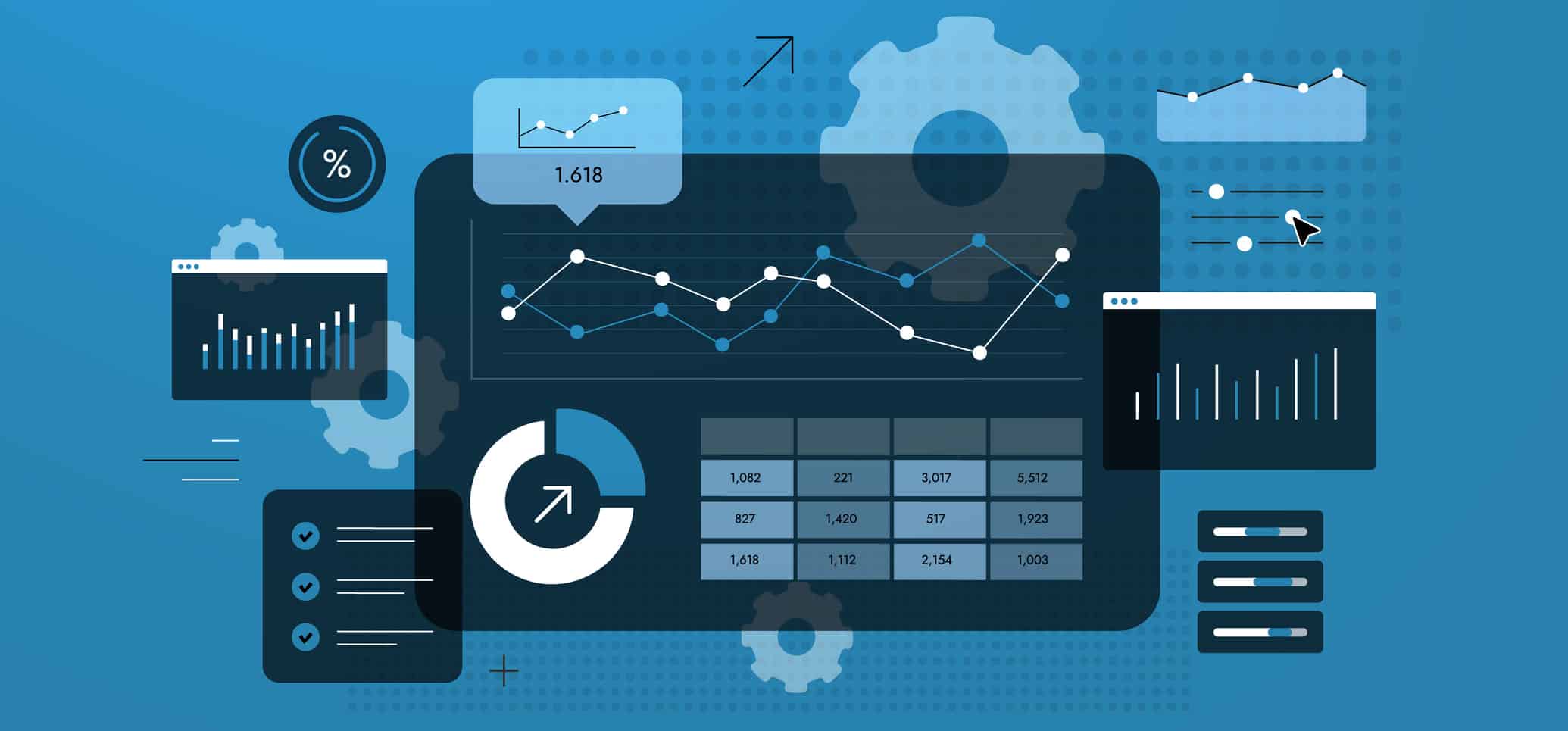
Marketing performance dashboard with conversion metrics, engagement charts and automated reporting. Marketing performance dashboard for digital ad campaign optimization and growth vector illustration.
Does this sound familiar?
A counter rep entering an order can’t find the customer. Under pressure to finish the order, he creates a new customer. Now every report, workflow and decision that relies on that data inherits the problem.
Moving those records to a cloud platform will not resolve the duplication. Putting them behind a pretty dashboard will not establish which record is correct.
This is the difference between adopting modern technology and modernizing data: One changes where the problem lives and the other fixes the conditions that created it.
Data modernization is the work of making data accurate, consistent, connected, and usable across the business. It includes how data is entered, defined, owned, governed and delivered to employees when they need to make a decision.
Technology supports that work, but it is not the work itself. If leaders define modernization by the platform they bought, the dashboards they launched or the AI tools they introduced, they are missing most of what makes modernization successful.
The real work is fixing the data, processes and ownership underneath those tools.
Here are some signs your data modernization effort may be more cosmetic than substantive:
- Old reports have been recreated with better graphics
- Employees still export information to spreadsheets before using it
- Different departments maintain competing definitions of customers, products, inventory, margin or revenue
- No one owns the quality of the underlying data
- The project began with a technology selection, including AI, rather than a business problem
- Employees have access to dashboards but do not understand how to use them
- A “successful” technical deployment leaves the business process essentially unchanged
Just having access to data isn’t the golden ticket. The question is what you can do with it.
A Faster Wrong Answer is Still Wrong
Every modernization initiative should be connected to a business result: lower cost, less risk, improved margin, stronger revenue, better inventory performance or a better customer experience. If you cannot identify the outcome you are trying to improve, you probably have a technology project, not a modernization strategy.
You also need business and technical people working together. They must agree on the problem, the business rules, the data required and what success looks like.
Rebates are a good example. The technical team may know exactly how purchase-order data moves from the ERP into a data warehouse or reporting platform. But do they know when the company earns the rebate? Is it when the order is placed, when the inventory is received or when the product is sold? What happens if the purchase order is split or changed?
An agreement may also depend on which factory shipped the product. If the ERP does not capture that information, a new platform cannot manufacture it. It can process the available data faster, but that does not make the calculation correct.
You need someone who understands the technology sitting next to someone who understands the contract, the accounting, and how the product moves through the business. Otherwise, you can build a technically sound solution that still gives you the wrong answer.
The same is true across the business. A new platform will not decide which of two customer records is correct. It will not fix an incorrect unit of measure entered on a purchase order. And if inventory is not serialized, it will not automatically connect a sale to a purchase that made it eligible for a rebate.
But it may move those problems downstream faster.
That is why modernization still depends on some very basic disciplines:
- Clear ownership
- Common definitions
- Input controls
- Search and usability
- Master data management
- Exception handling
- Data-quality monitoring
- Employees who understand how their actions affect your data
None of that is new. Distributors have been talking about data ownership, governance and quality for decades. What has changed is how quickly and affordably we can put those principles into practice.
Start with a business problem that matters, fix the data and process behind it and put the answer where an employee can use it.
Putting the Data Where Decisions Happen
Preventing bad data (as in the case of the counter rep at the start of this article) is only the first step. The team also needs to be able to use that information to make better decisions.
Take a different order-entry scenario. A customer wants more of a product than the distributor has available. The rep could enter the order, discover the shortfall and then search manually for another option. A more modern solution would identify the inventory issue as the order is being entered, find an equivalent product that is available and give the rep the option to offer the substitute while the customer is still on the line.
The same idea applies to purchasing. A buyer deciding whether to make a forward buy needs more than a report of historical prices. The decision may also depend on current inventory, expected demand, lead times, carrying costs and likely changes in commodity prices. Bringing those inputs together can help the buyer act before a price increase or supply disruption.
In both cases, the goal is to use the data to help someone make a better decision while there is still time to change the outcome.
Build Literacy and Trust Alongside the Technology
Modernization does not end when employees get access to a dashboard or a new technology solution.
Every employee needs a basic understanding of how the company makes money, why margin matters and how inventory affects working capital. They also need to know where the data comes from, what a metric means and how the information they enter affects everything that happens downstream.
The input is as important as the output. If someone creates a duplicate customer, enters the wrong unit of measure or skips a required field, that mistake can flow through reports and business processes long after the original transaction is complete.
Even accurate information has limited value if employees do not trust it.
At companies where I led data programs, we certified reports to show that quality controls had been applied and that employees were using the right version. We also built status pages that showed when the data was last loaded, how many error records came through and whether the report was complete.
Employees should not have to guess whether a dashboard is current or whether numbers or recommendations can be trusted.
The Real Test of Modernization
For the counter rep who could not find the customer, real modernization would make the correct customer easier to find, make a new duplicate record harder to create and give the business clear ownership of the data.
The same test applies throughout the company. Does the initiative help employees catch problems earlier? Does it improve a pricing, inventory or purchasing decision? Does it protect margin, reduce risk or make the customer experience better? Or does it just present the same information and processes through newer and shinier technology?
Customers will never know what data platform you use, and they probably do not care. They care whether the counter rep can find their account, answer a question, locate the right product, and offer an alternative before they take their business somewhere else.
That is the real test of modernization. Not whether the new system went live on time, but whether the company can respond faster, operate with fewer mistakes, and remain relevant as customer expectations change.
The technology matters. But what matters more is what your people and your customers can do because of it.