


MDM Market Leaders
QXO Leads Distributors on Forbes’ Most Trusted Companies in America
October 22, 2026


Sales & Marketing
A distributor’s biggest accounts aren’t always its most profitable. This piece explores how customer stratification reveals how buying patterns and service demands shape account value, helping distributors protect core relationships, uncover growth opportunities and adjust pricing, delivery and support practices to make more customer relationships profitable.
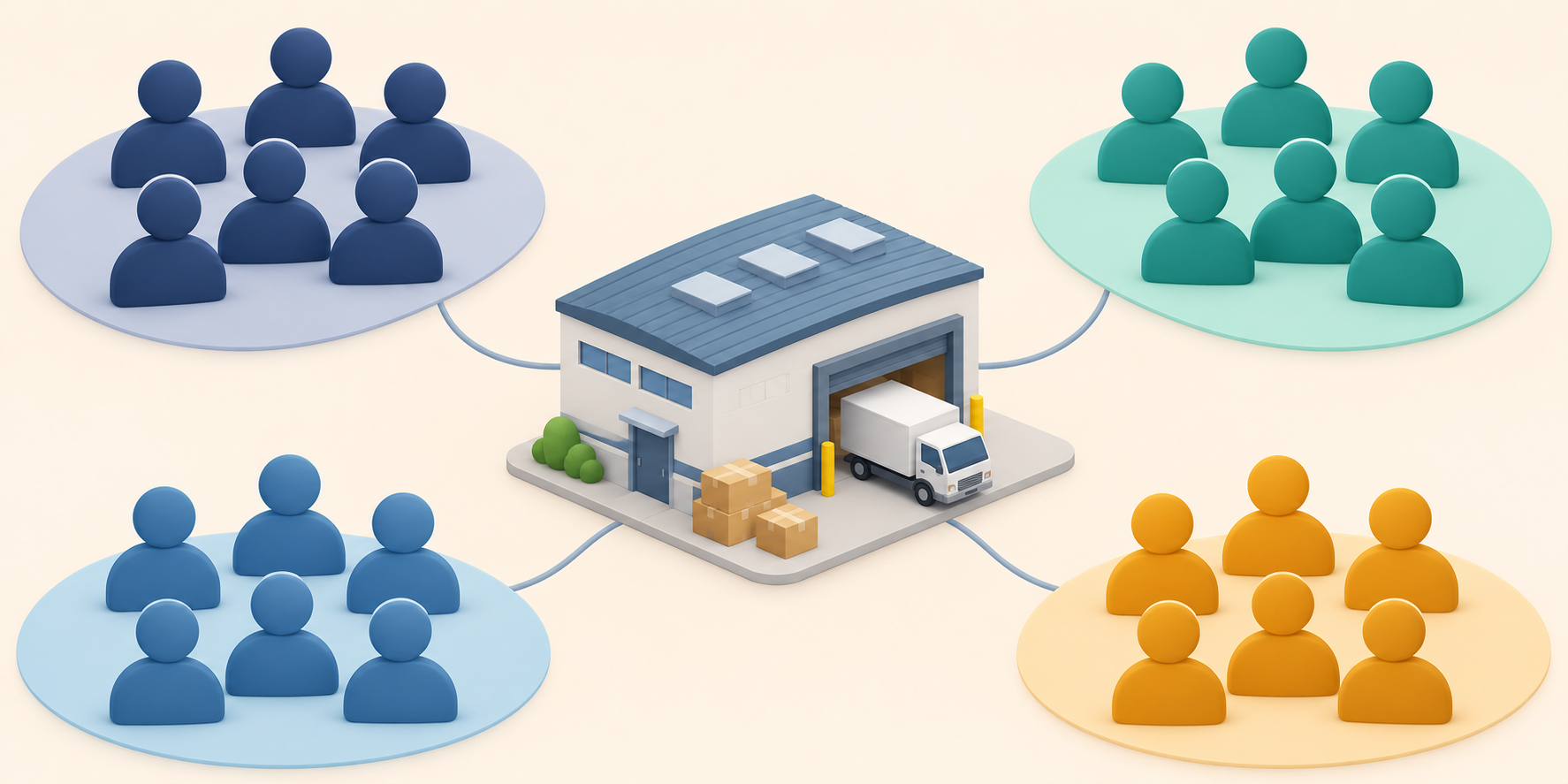
In its simplest form, distributors connect manufacturers with contractors, industrial maintenance teams, original equipment manufacturers (OEMs) and commercial and institutional customers. However, their value extends beyond taking orders, checking on product availability and providing product and application expertise; they provide crucial services that help customers operate, plan, and complete their work, which can include:
This wide scope of services provided creates customer value, but it also requires inventory, working capital, and staff time. Understanding the cost to serve and/or investments distributors make into these customers and how they, in return, transact with them is essential to customer-level profitability.
Customer stratification — the practice of assessing customers by buying power, loyalty, profitability, and cost-to-serve — helps a distributor decide where to invest their resources. Revenue alone does not reveal the economic value of an account. Two contractors with similar annual purchases can produce vastly different results when delivery frequency, quotation activity, returns, project storage and payment patterns are considered.
A distributor must balance everyday demand for the product lines they carry with project and customer-specific requirements. Procurement schedules can change after material has been ordered, leaving inventory committed to a customer that is not ready to receive it. Customer-specific, committed inventory and/or any value-added services applied to products such as cut-to-length wire and cable add another challenge, and handling requirements affect what is truly available to sell. Customer stratification adds account economics to these decisions. It can inform which relationships warrant dedicated stock, scheduled releases or specialized services, while project forecasts, supplier commitments, and contractual obligations continue to govern fulfillment.
A competitive quotation may win the order without adequately covering the work that follows. Multiple deliveries, ship complete, expedited freight, kitting/assembly, submittal coordination, returns and extended storage can change the economics of an account. Raw material price movements and the timing of supplier cost changes can also make quote validity and replacement-cost visibility important.
Stratification helps distinguish a genuinely profitable contractor relationship from a high-volume account whose service requirements absorb its gross profit. The answer is not automatic price increases across every item. A better response may combine disciplined quote expiration dates, appropriate approval of price exceptions, coordinated deliveries and clearly agreed-upon charges for special services. Supplier rebates and special pricing agreements should be reconciled where applicable so that account profitability reflects the economics of the transaction rather than an incomplete invoice-margin view.
Accounts can have very different buying patterns. A contractor may purchase one product category from one source and other product categories from other suppliers. An industrial maintenance customer may buy a narrow range of replacement products while sourcing complementary categories elsewhere. Stratification helps turn those patterns into account plans: protect profitable recurring business, investigate gaps in product coverage and identify where additional support could earn a larger share of the customer’s purchases.
The National Association of Wholesaler-Distributors describes a SURGE framework — Segment, Understand, Refine, Generate and Empower — for turning customer stratification into action. Its four customer groups provide a useful starting point:
Core customers are a distributor’s biggest revenue source — they deliver high margin, large volume, consistent buying velocity and good cross-categorization spend. Protecting and nurturing them should be paramount as these customers provide the highest value and most growth opportunities for their business.
By implementing solutions aligned with the customer stratification methodology, businesses can identify and monitor these accounts to ensure they remain in good standing while at the same time, give you the levers to move marginal customers toward profitability.
Stratification is purposely designed to assess existing customer bases because current customers — specifically core ones — are the key to growing a distributor’s business.
Consider this illustrative comparison of two customers that generate similar annual sales. The first shares forecasts and project schedules, consolidates material releases, accepts planned deliveries and pays within agreed terms. The second requests repeated emergency drops, special handling/services, late payments, frequent returns, long storage periods and repeated quotations that rarely become orders. Their revenue may look alike between the two customers, but their contribution after service costs can differ substantially.
What should be done in this situation? Does the distributor cut their losses with the high-service demand customer and focus their time and effort on the productive one? The right response is to understand and redesign the second relationship — not simply stop serving it. The distributor and customer could agree on deliveries, returns, payments, category spend, quote-response expectations and charges for exceptional handling or storage where appropriate. A trial period would then show whether these changes improve profitability while preserving the value the contractor receives.
Across accounts, customer stratification can help address three recurring gaps:
The result should be account-level guidance that people can use in daily work. An account plan might identify a missing product category, a change in buying frequency, an unusually high return rate, or excessive delivery activity. Where systems permit, relevant guidance can be surfaced in the ERP, CRM, quotation process and order-entry workflow so that outside sales, inside sales, and counter teams work from the same information.
The practical benefit is a set of operating rules that connects account economics with customer needs.
Customer stratification also gives organizational teams a common basis for decisions. Each function sees a different part of the relationship:
A useful starting point is a shared account scorecard built from reliable transaction data and reviewed with the people who know the customer. Include sales and gross profit, order and line counts, returns, delivery activity, payment patterns and product-category penetration. Add committed inventory and specialized service costs where they can be measured consistently. If cost allocations are estimates, call them estimates; a profitability score is only as reliable as its underlying data. Review project-driven accounts over a period long enough to avoid treating the timing of a single release as a permanent change in customer value.
Distributors do not need to choose between strong service and disciplined profitability. Rather, they must understand which services create value, what those services cost and where deeper investment can produce sustainable growth. Customer stratification turns that understanding into more focused account plans, better-coordinated inventory commitments and clearer pricing and service expectations. Equally important, stratification identifies the core customers. Protecting and nurturing them should be a distributor’s number-one goal as core customers provide the highest value and most growth opportunities for their business.
As a final note, don’t overlook smaller customers or withdraw promised support. Rather, build a service model that helps each relationship become more valuable to both the customer and the distributor.

Stay Informed
News, trends, and analysis for wholesale distribution leaders. Free, everyday.
Subscribe to MDM Update